Showing posts with label Leadership. Show all posts

Thank You Greater Clark

Thank you Greater Clark for allowing me to serve you, your students, your educators, your staff, your families, and your community for the past four and a half years. It has truly been one of the greatest joys of my life. However, July 21 2017, will be my last day. Before I get into what I'm doing next, let me first try to capture what this opportunity has meant to me and my family, and to say as many thank yous as I can come up with.

When I came to Greater Clark to serve as the director of technology I had no administrator experience. I had spent 9 years in the classroom as a secondary math teacher and 18 short months as an eLearning coach. I knew just barely more than nothing about running an IT department and how infrastructure needed to be set up and maintained. I just had a passion for leveraging technology for learning and transforming teaching. Greater Clark took a risk in hiring this 32 year old kid and my family was forever changed.

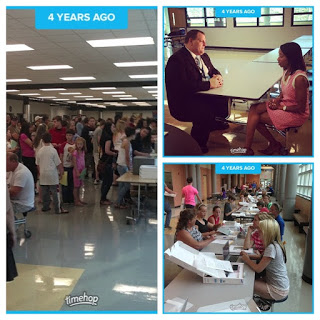
Over the past 4.5 years I have seen our district embrace change. I'm incredibly proud of the 1:1 initiative we rolled out with chromebooks my first 6 months on the job. I remember that almost everyone I spoke with was convinced we were going with iPads but I saw the potential in chromebooks to bring equity and access to 8,000 students. Where we could only afford iPads for about 3,000 students at most. At the time we rolled out the chromebooks we were somewhere in the top 10 in chromebook rollouts in the nation. Actually, this showed up in my TimeHop today. It was day one of our first ever chromebook rollout day. We rolled out 6,000+ chromebooks and saw 15,000 people (students and guardians) in 3 days.

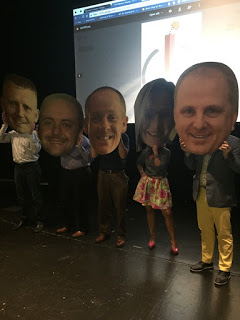
I'm proud of the four amazing eLearning Coaches I worked with on countless projects. In no certain order, Katie, JT, Melissa, and Jessica are four of the most amazing educators I've ever had the privilege to work with. I remember just about everything from my interviews with Katie, JT, and Melissa. Jessica joined our team after JT was promoted into an assistant principal role. With each one of them it was within the first few minutes of their interviews that I knew I had to have them on the team. I can honestly say there was never a moment when I regretted having any of them on the team. There are too many stories to tell in this space. Just know I'm a better person because of these people. 

I think about partnerships with different companies that helped us put in the right equipment in our classrooms, the ceilings, and in our data closets. Empower Learning, Matrix, and RTI, just to name a few. The progress we made in our WiFi and overall speed of our internet connection. Honestly, when I think about the age of the equipment when I first started to what we have now...

As all of you know, it's not about the equipment, it's about the people and Greater Clark has some tremendous people. I was telling somebody the other day that the things I'm most proud of, I had very little to do with. I just said asked questions, said yes, and tried to support the people closest to the students the best way that I could. 

The teachers at Greater Clark are some of the most caring and passionate educators I know. I love seeing what they did with what we put in their hands. Seriously, most the ideas the eLearning Coaches and I presented were nothing compared to where classroom teachers took them. It didn't matter if you were walking into 5th grade classrooms at Wilson, ELA classrooms at River Valley, the Media Center at New Washington, or hanging with the Chrome Ninjas at JJ, you were going to see classrooms that empower students. Thank you teachers for letting me into your classrooms. Thank you for giving me the chance to serve you and your students. Thank you for sharing your genius with me.

I have worked as a classroom teacher and served in central office. However, I've never been a principal and for that I am thankful. I'm not sure how they do what they do and stay sane. I watched as our principals navigate supporting teachers, implementing initiatives we came up with at central office, work with their families, and run the business side of their schools.  Not to mention the 2,325 weekly meetings they go to. Thank you principals for allowing me to work side-by-side with you. I learned so much from each of you about how to lead. 

Now to my central office friends. It was an honor to serve as a district administrator with all of you. Balancing out the vision we had for the district with the needs of individual schools and situations is no joke. You try to do what's best for all while honoring what's best for each individual. You have people that are grateful for the work you do but also have to address the concerns of the many. Most of the time those upset have valid points but you always remind yourself that none of us are as important as all of us. Thank you for allowing me to grow in this position. For the grace you gave me when I messed up and for all of the support. 

I can't go on without thanking the classified staff in our district. When most people think of school employees they think of teachers, counselors, and principals first and they might think of bus drivers, custodians, and cafeteria works. However, about half of our staff is made up of classified employees. They are the unsung heros of our schools. In many ways they are the ones that make all of this work. Thank you for all of your hard work. Even though it's not always talked about, I promise it doesn't go unnoticed. 

In that group of classified employees is the team that I was honored to lead. Our IT team is just amazing and I will miss working with them on a daily basis. When asked about how we prioritize the massive work on our plate they all can tell you the same answer. Our number one goal is to make sure technology failure doesn't get in the way of learning. When looking at the needs in our buildings the ones that are currently impacting instruction are the ones that we take care of first. Thank you for showing me how much you care about our kids. Thank you for taking me in and helping me learn about infrastructure of a school. Thank you for never holding the fact that I am not qualified to do your jobs against me. Thank you for making leading look easy. It's easy to lead a group of people that always want to do what's best and that are all working together as a team. 

Thank you for the eLearning Conferences (and all of you who presented and served at those conferences), the YouTube Videos, the Digital Citizenship Certification. Thank you for being there for my family when Ruth was sick. Thank you for all of the learning, the laughs, the challenges, the successes, and the failures. Thank you Greater Clark for the memories. 

I'm sure I missed some things. How can you capture the greatest job you've ever had in a blog post?

Now I know what you're thinking, if you made it this far. If this job is so great then why are you leaving and where are you going? Simply put, it's the right time and this is the right opportunity. 

I'm happy to announce that I am joining the team at Riverside Technologies Inc (RTI). We are a technology solutions company. I'm excited to partner with schools and businesses to provide the right technology solutions, provide great support, and professional development. I left the classroom because I was interested in the opportunity to lead teachers. I left my role as an eLearning Coach and became the Director of Technology because I wanted to lead a district. Now I'm leaving that role for this one because it will give me an opportunity to work with multiple school districts, to branch out into the private sector, and to grow as a leader. 

I'll still be blogging, I'll still be working with schools, and I'll still be dreaming about how we can work together to unleash learning. 

Maybe You're Looking At It Wrong


I made a purchase the other day and I'm pretty excited about it. Before I tell you what it is, I must first tell you about the person who inspired me to buy it. Her name is Grace Hopper and if you've never heard of her, then you're not alone. Up until last week, I don't remember ever hearing about her either. 

Allison McCann said this about her in her post, The Queen of Code:
"As a rear admiral in the U.S. Navy, Hopper worked on the first computer, the Harvard Mark 1. And she headed the team that created the first compiler, which led to the creation of COBOL, a programming language that by the year 2000 accounted for 70 percent of all actively used code. Passing away in 1992, she left behind an inimitable legacy as a brilliant programmer and pioneering woman in male-dominated fields." 
There is also a great mini-documentary directed by comedian of Community fame, Gillian Jacobs.

I was so impressed with her story and at one point the documentary it talks about a backwards clock she had in her office. The clock would really confuse people and they would ask her why she kept it in her office. She would say that there is absolutely no reason it has to go one way.


As soon as I heard that I knew I had to have one for my office.  When I opened it up, it wasn't long before I was explaining its significance to a coworker in my office. This new reminder to me and those who see it that we don't have to do it just one way. What works for one doesn't work for all.

I was recently in a conversation about best practices and the direction of schools. Upon hearing somebody tear down another school because they "weren't following best practices". I asked the person if the data supported their claims about the state of that school. Her response was that they are doing great work but just imagine how much better they would be doing if they followed best practices.

It just made me scratch my head because how dare we be so arrogant and say that we have the answer to every school, every student, and every community. I'm reminded of something my friend Dan Spencer is fond of saying. (And I'll have to paraphrase because I can't remember the exact quote for the life of me.) There are no silver bullets in education but if we use a bunch of silver BBs then we can make a difference.

It's the idea that we can't find one idea and then apply that idea to every situation. I was recently talking to a district about their technology plan and where they want to be as a district over the next couple of years. I was telling them about the great work we have done in our district and how we've transformed our district and community during my tenure as Director of Technology. However, I'm not naive enough to think that whatever we have done in my district will yield the exact same results in another district. It's about taking what you know, adding to it the knowledge of the community/audience and finding the best fit.

I would rather strive to find the best fit than just blindly implement the best practices.

Dream With Me (Keynotes, Presentations, and Workshops)


Inquire About Booking Me

Keynotes:

Making the Shift

This keynote is all about embracing change. Change is an emotional event for everyone. It can bring equal levels of fear, excitement, and uncertainty. Through practical examples, research driven implementation tools, and relationships we tackle the challenges of doing what's best for our students.

3 Keys to Unlocking Potential

In this keynote I will address what I believe are the 3 keys to unlocking potential. Potential in our students, our educators, and our community. Lets unlock the untapped potential in every individual together. 

What's Next in Learning

This keynote takes a fun and exciting look at the latest in learning. Join me as we learn how to dig through onslaught of educational buzzwords and the latest technologies to find the right fit for our students and community of learners.

Be the Light in Someone Else's Tunnel 

Relationships trump everything. You can master standardized test, embed the best teaching practices, and have the most state-of-the-art facilities but if you don't have relationships, then it won't last. Lets be reminded that students aren't numbers, teachers aren't tools, and we all need a little more light in our lives. 

Inquire About Booking Me

It's Just Citizenship

In this keynote we tear down the notion that somehow digital citizenship is something different than just being a good person. We'll look at building empathy, compassion, and respect in the classroom, the cafeteria, the community, and yes, even on social media. I will share examples and resources for parents and educators on how to help students become good citizens. 


What Do They Want?

What are we preparing students for? What are colleges and business leaders looking for in their next student/employee? In this keynote I will share the latest research around college and career readiness. We will examine what technical and soft skills are important and how we can engage our universities and local businesses to ensure we are preparing our students for their future in our community. 

Magnify Learning

Technology is not neutral and it has had a profound effect on our schools and community. This powerful and engaging keynote looks at how technology magnifies everything, for better or for worse. We will look at how we leverage technology for learning, use it to magnify our strengths, and overcome our weaknesses.

Presentations: 

These are available in 1 hour breakouts and up to half-day workshops

Inquire About Booking Me

  • Transformational Leadership
  • From Innovation to Implementation
  • Why People Should Follow You
  • Sustaining Initiatives
  • When Innovations Fail
  • Identifying Tools for My Classroom
  • Implementing Chromebooks
  • How G Suite It Is
  • What Does A Successful 1:1 Look Like...in my classroom...in my school...in my district?
  • 1:1 Classroom Management Tips & Tricks
  • Digital Citizenship and the Digital Native Myth 
  • Loud Noises, Bear Attacks, and Other Things That Distract Learners
  • Stay Fresh: How to stay in touch with the classroom once you've left it
  • Engaging Your Community
  • Creating Voice and Choice for Your Students...Your Teachers...Your Leaders
  • Building a Initiative Campaign
  • Project Based Learning is the Main Course, Not the Dessert
  • From Data Informed to Data Driven
  • Creating Meaningful Faculty Meetings
  • Team Building and Ice Breakers
  • Buzzword Balderdash: Finding the real meaning behind what your principal/superintendent is asking you to do.


Inquire About Booking Me


Ideas Worth Wrestling With

I'm really working hard on getting back in the habit of blogging. As last year came to a close, I just couldn't stand the fact that I wasn't writing as often as I had just a couple of years ago. If I'm being completely honest, I would admit that I had started to feel a little stagnate in my thinking. I needed to get my creative juices flowing again. I have a new logo, a new design, and now this is my fourth post this month.

It's not the redesign of the website that is getting me back into blogging, but it's a reminder about why I blog in the first place. I blog because I believe in the power of reflection, it forces me to wrestle with my own thinking, it makes me consider the viewpoint of my potential audience, and it simultaneously gives me a clearer view of the past, while shaping my view of the future.

Nobody has helped me come to this realization more than my good friend, Bill Ferriter. When I first started blogging several years ago I was very fortunate to have Bill come to the district that I was working in at the time. We got to hang out that night and I'll never forget some of the things he said to me that night. One of the most helpful things he said to me that night, and has repeated to me on several occasions since then is, "everything is a blog post".

When he told me that, I took it to heart. You can see it right here on this site. A couple of years ago, I had 50+ blog post. Then the following year I dropped to 21 blog post. The last two years I have written a combined 11 blog post for this website.

So what changed? I think I can point it to a couple of things.

  • I took a job as Director of Technology. It's not that the job took up more of my time and I didn't have time to blog but I became more self-conscience of the potential to say something wrong and offending somebody. I say self-conscience because I've never actually been called out on anything I've written or tweeted about. Maybe fearful of saying something wrong is a better way of saying it. However, in the end, I've probably done my district a disservice by not blogging more the past couple of years. There is such potential in the power of being an open, reflective, transparent leader. 
  • I started writing for somebody other than myself. I said in my last post that it's more important to know who you aren't than it is to know who you are. Well, I'm not a "tip of the week" kind of writer. I've tried that and if you look back at the year when I wrote 50+ blog post, you will find a decent chunk of "how to" post. 

All of that being said, the most important thing I've learned about blogging is this:

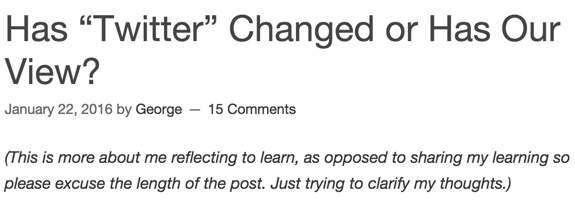
  • Blogging is for me. I know that sounds selfish but I need to blog for me. I need to be reflective so that I can grow and move forward. I need to wrestle with my ideas so I can find my footing around the issues I face. It's why I loved the post I recently read by George Couros. Check out how he started this blog post:
  • How awesome is that beginning?! It captures exactly why blogging is just as much, if not more, for the writer than the reader. Of course, I think we already knew this. I think back to how much I learned about math when I started teaching it because I had to reflect on my math background and teaching it forced me to wrestle with mathematical concepts. 
So I am going to write when I need to reflect on my learning and my leading. I am going to blog when I need to wrestle with an idea and flesh it out so I can find out how I truly feel about it. Even when I wrote my last post; I wrote it, went to bed with it scheduled to publish the next morning, reread it when I got up, took it down because I didn't really think it matched my ideas on the topic, rewrote it, and republished it.

Am I still worried about somebody taking something I post on here the wrong way. Sure, perhaps a little bit, but I'll filter my thoughts as I write. The idea of writing for myself but acknowledging the fact that I have an audience, forces me to think more critically about what I'm writing. It puts the appropriate level of constraints on me to force me to be a more creative writer and sharer of ideas. John Spencer recently put together this brilliant video on the power of creative constraint


For the first time in a long time, I feel very excited about my ability to keep up with my blog this year. My reviewed vision and passion for reflective and transparent leadership will help shape me as a blogger. 

If I have an audience and my blog helps me form a relationship with folks currently outside my circle of learners, great!  I'm sure these ramblings can help somebody. If my audience is just one person, me, then that's ok too because I know my writing helps me out, if nothing else. 

If you have a moment, I'd love to hear from you. If you're a blogger, tell me why you blog and drop a link to your blog in the comment section. 

Two Questions You Have To Be Able To Answer

I have two questions to ask you that I think you need to be able to answer if you're going to unlock the leader inside of you and, ultimately, the leaders inside of others. 

*spoiler alert* - You might be tempted to think that the first question is the most important question, but it's not.

First question: Do you know who you are?

We have to know who we are if we are going to lead. I don't care if it's leading a district, a classroom, an athletic team, an academic team, or a fantasy team.

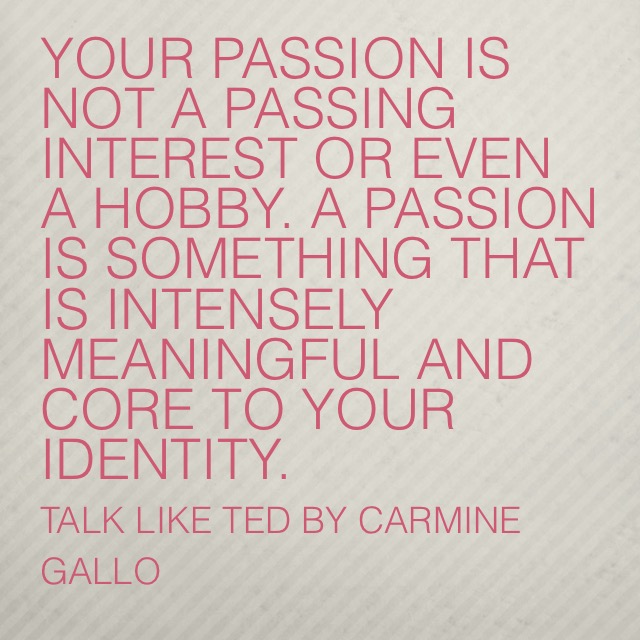
You have to know what makes you tick. In the book, "Talk Like TED" by Carmine Gallo, he says you have to answer the question, "What makes your heart sing?" I don't think you can effectively lead if what you're doing isn't your passion.


I don't know about you, but the hardest task for me to get done are those task that don't directly tie into what I'm passionate about. However, when it comes to something I'm passionate about, I can just get lost in it. 

Who doesn't want to follow somebody who can just get lost in what they are leading? There are things that I'm not passionate about, like grant writing, but I've worked with people who just love that challenge and I can't help but get sucked into their enthusiasm. I don't get why they're so excited by it, but I admire their passion. 

Here is my advice, don't take on a job, role, or position that you're not passionate about. In the end, no matter the money, you won't be happy and you certainly won't be effective. 

Ok, now for the more important question. As important as it is for you know who you are, this is more important. 

Second question: Do you know who you are not

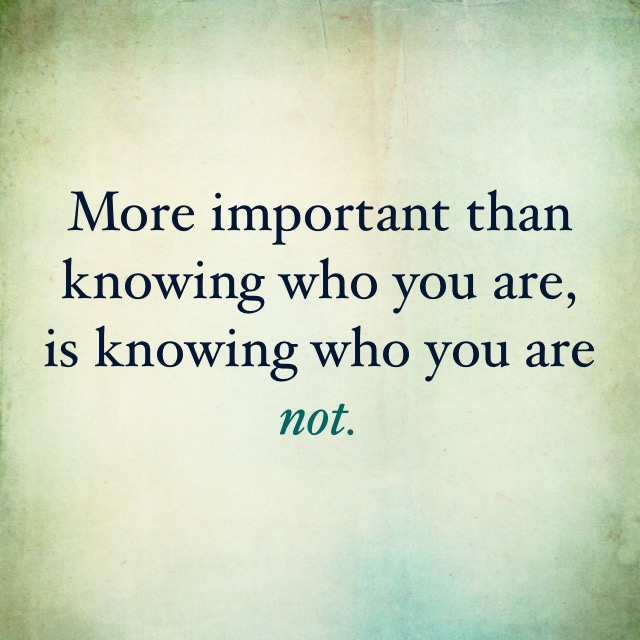
More important than knowing who you are, is knowing who you are not. Too many of us end up spinning on our wheels and burn ourselves out by trying to be something or somebody we aren't. This is more than just knowing your weaknesses. You can't really be happy with you, are until you are ok with you are not. 

Here is what I know about myself. I am a middle school teacher. It's who I am. It's part of my gifting. I am also an administrator. It just fits me. I'm not saying I'm perfect in these roles and I certainly have room to grow. 

I once took a job as a high school teacher. Not because I wanted to teach high school, but because I wanted to live in that area. It almost crushed me and made me want to leave education all together. The problem is, I'm not a high school teacher. I remember being in college and applying for student teaching. I sat in a room being interviewed for the program and one of my professors asked me what middle school I might want to teach at next semester. I told her I wasn't going to go to a middle school, but that I was strictly going to be a high school teacher. She said, "I can't let you into student teaching then, because your are a middle school teacher if I've ever met one." Man, was she ever right about that, and I'm forever grateful for it. My last staff meeting as a high school teacher my principal was announcing that I had transferred to a middle school. My principal gave me a nice card and said to our staff of close to 100 teachers, "I think we all agree that Brett was meant to teach middle school." In other words, I was a really bad fit for high school. She was right. 


I feel the same way about my job now that I did about teaching middle school. This is who I am and it's where I belong. I couldn't imagine doing anything else right now. Maybe one day I'll be a principal, or even work my way up to a Superintendent. I honestly don't know. There are days when I think I'd really like to try my hands at those things. All I know right now is that I've never been happier or more excited about the work I get to be a part of every 

I admire people who recognize their place in the world and know where they belong and where they are better off leaving alone. I think of some of my very talented teacher friends, who would make great principals and district admins. Sometimes I know they get asked why they don't leave the classroom for an admin job. I know many of them know that even though they have the talent for the job, it's not their passion and it's not who they are. 

Just because you have the skill set to do a certain job, it doesn't mean you should be doing that job. 

In my lowest point of teaching, when I was looking at the possibility of leaving, I looked into what I could do with a degree in math. Let me tell you, there are some lucrative positions out there for a person with a degree in math. In the end, none of those options were the right fit, because that's not who I am. 

I use these answers to shape what I lead, where I lead, how I lead, and who I lead. I try to look to for people to learn from who are both who I am, and who I am not. I learn different things from those people. I grow under those people and I work on strengthening my strengths and minimizing my faults. 

I also make sure I have people working with me who aren't me. Sure, I could have a team full of Brett Clark clones. Maybe that would be easier and maybe we'd have less conflict. However, we'd also cover less ground, help less people and be less creative (because conflict is the birthplace of creativity). 

Does this make sense? Do you know who you are and who you are not? We should strive to be part of team that is working toward a common goal, is full of people who are in positions that match their passions, and a team where each others' strengths are the other team members' weaknesses.


3 Things I'm Looking Forward to in 2016

Happy Anniversary! 


As I sat down last night to write this post, I was thinking back over the past 3 years of my life. When I wake in the morning, and by the time this post goes live, it will be my anniversary of the my first day as the Director of Technology for Greater Clark County Schools. It's been an amazing 3 years, full of ups, downs, triumphs, and learning experiences.


Here are just a few things I've been blessed to be a part of:


  • I work under leadership that makes me feel empowered to pursue all possibilities.
  • We rolled out 8,000 Chromebooks to grades 3-12
  • Added 3 amazing eLearning Coaches to the district to help drive the conversation of learning environments. Because if we don't have those conversations, bullet point number 1 is pointless.
  • Hosted 3 eLearning Conferences, and working on number 4. Keep July 25 open. You won't want to miss it.
  • I believe we've had 18+ states and Canada represented at our conferences.
  • I've watched as those conferences went from being almost all outside presenters to now the high majority of sessions are lead by our own teachers, admins, and students.
  • More importantly, I've been in classrooms and watched teachers and students get engrossed in learning. I've seen them take virtual field trips, discover their passions, and learn how to maneuver in more connected and open environment. It hasn't been easy, and it hasn't always been pretty, but our learners have been up for the task.
  • Most importantly, my own kids love to go to school every day.


3 Things I'm Looking Forward to in 2016

1:1 Refresh

It's hard to believe that I've worked here for 3 years already. It's even harder to believe that we are already going to be refreshing our 8,000 devices. We've been evaluating the impact of the 1:1 on our learning environment, looking at devices, planning professional learning opportunities, and learning from our mistakes. 

It's nice to look back over all that you've accomplished, learn from your shortcomings, and plan for the future. I look forward to sharing with you what we learn from our reflection process, and where we want to go from here. 

Learning Spaces

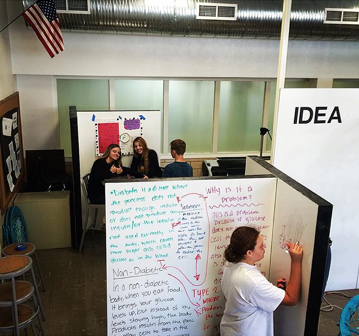
I love looking at how classrooms are designed and how the design of the learning space sets the tone for the classroom. This past summer I was able to visit the Affton School District, where I got to see their collaboration room. Check out the Room 15 website and get inspired! 

I worked with our Building Trades teacher at Jeffersonville High School and his students helped me build 8 mobile T-Walls to send out to our secondary schools. They are going out to schools very soon and I will be blogging more about this as well. 

The Unknown

It seems like every year I go into the year thinking I know how things are going to turn out. Then, every year I find out that for all of my planning and preparation, life happens, and things rarely go as planned. So, in 2016, I'm looking forward to the unknown. Who knows what I'll learn this year, or what experiences I'll have. I can't wait to have my mind blown by a project that a student and teacher complete. It's going to be exciting when a school comes up with something that is seemingly impossible and then pulls it off! My own wife and kids are going to continue to amaze me every week.  I'm sure I'll even shock myself at what I'll accomplish in 2016. 


So here we are...already a week into 2016...already 3 years into a job that 5 years ago I never would have even dreamed about. Here's to 2016, may it wreck all of our plans, and exceed all of our expectations. 

I'd love to hear from you and what you are looking forward to in 2016!

Vision, Buy-In, and Sustainability

A couple of weeks ago I had my second Leadership Southern Indiana: Discover event. You can read about my first event here.

This was out "History and Heritage Day".  We heard from experts on the history of the area, visited local historical areas like the Town Clock Church to hear about the underground railroad, discussed the founding fathers of the region, and ended our day at a business that has been in business for over 120 years.

There are three things that stood out to me about the people I learned about during this visit. They had vision, buy-in from their followers, and sustainability. 

Vision

For me, it all starts and ends with this. There is a phrase that we have using a lot around my school district lately. Clarity is the remedy for anxiety. I don't know who said it first, but I first heard it from Jason Roseberry. So he gets the credit today.  I witness so many people who suffer from anxiety at their job. A lot of time I have found that a large portion of their anxiety comes from a lack of clarity. They're unclear about whom they take their issues to, or what they're allowed to do to solve a problem. They're unclear about what their role is and what their expectations are in their position. Or maybe they're unclear about the direction of a project or of the entire organization. In the end, wherever you find a lack of clarity, anxiety isn't far behind. 

A clear vision that invokes a positive emotional response, with a call to action that people can get behind, is a remedy for anxiety. A clear vision of roles and responsibilities reduces anxiety. I think you'll be amazed at how many struggles can be reduced or eliminated just by having vision. 

Check out this video I saw the other day at a 1:1 symposium with the 1:1 Institute. The video you're about to watch includes some metronomes, a board, and a couple of soda cans. The experiment is meant to try to get all of the metronomes in sync with each other. While you're watching it, look through the lens of leadership. If what happens in the video is a metaphor about leadership, vision, and the fulfillment, then what do each piece of the science experiment represent?


Did you catch it? To me, the board represents vision, the soda cans represent leadership, and the metronomes represent those who are tasked to fulfill the vision. The board (vision) provides stability, something to stand on, and is the key to getting everyone on the same page. The soda cans (leadership) supports the vision, and provides flexibility while everyone gets in sync with each other. The metronomes (the team) might start off out of sync, but when given time, flexibility, and a consistent vision, they get to where they need to be. 

As I learned about the history of the area, I couldn't help but admire the vision the people who built this area had. They all saw something in perspective areas that perhaps many other people did not see. 

Buy-In

It wasn't enough that the folks I learned about had vision, they had to get people to buy into and support their vision. I'm always amazed at the amazing commitment and sacrifice people will make to fulfill a vision they truly believe in. 

I've written about this in the recent past and it quickly become one of my go-to presentation at conferences. I'll be honest, I look back over that post and I can identify exactly where I think I am in my role as a leader right now in my district and it's a little scary. I truly believe in the vision I have for our schools and while we have had some tremendous success over the past couple of years, I am always looking for ways to create more buy-in. 

I really wish I could have talked to some of the people I learned about during this event. I would have loved to have picked their brain about the ups and downs of vision casting and vision fulfilling. It must be this sometimes awkward balance of resolve plus flexibility. Knowing when to push forward, when to slow down, and when to change all together. 

Looking over that last paragraph and I think that maybe vision casting is the key to all of this. Can you tell me what your vision is? What's the vision of your company? What's the vision the project that you're leading or a part of? How often do you cast your vision? 

It's something that we are working on in my school district. We are about to enter our fist refresh of our 1:1. Working with teachers, administrators, parents, students, and other community leaders I am working to make sure that we know exactly where we are at, where we are heading, and how we are going to get there. However, I'm learning more and more that when all of that work is done, the real work has just begun. I've got to keep casting that vision over and over again, getting more and more bites, and reeling in more and more people who will be willing to help us reach our goals. 

Sustainability

A vision is about more than yourself. There is always going to be an "after you". A true visionary see far beyond the person they see in the mirror every day. The word that I kept coming back to during our event was legacy. I wondered how many of these local leaders and heroes ever thought about the legacy they were leaving behind. Did they ever think that people would be learning about them hundreds of years later? I imagine that they would probably be more happy to know that the thing that they started was still standing, still growing, and still having a positive effect on their community. 

I am not out to create a legacy but I do wonder sometimes about what my legacy will be after this part of my journey is over. More than anything, I just want to see the work I'm a part of to leave a lasting impact on this community. 

The only way to do that is to keep reinventing yourself. This is why a vision statement is really only meant to be for a 3-5 year period of time. I'm not going to lie, as I said above, we are moving towards our refresh of our 1:1, and I have already started to think about what what the next refresh could look like. 


by Daniel Pietzsch on Flickr
In the end, I think that legacy stuff will take care of itself. For now, I'm just trying to find the right rhythm.

Discovering, Developing, and Enhancing Leadership Skills

A few months back I was given the opportunity to apply to be a part of a leadership program through a group called Leadership Southern Indiana. When I read that their mission was to "To actively engage leaders and develop ethical leadership that impacts our region," I was instantly hooked. I was excited at the opportunity to be a part of their program, "Discover".  This is a 9 month program that "aims to help participants become informed, inspired, connected and capable leaders that Southern Indiana will need to meet the challenges of today and tomorrow." As a leader in my school district, an active minister at my church, and a passionate resident of Southern Indiana, I couldn't wait to get started. 

This past week, on August 27 and 28, it all began at Wooded Glen Retreat and Conference Center. 


August 27th

I honestly had no idea what to expect. My optimism was high but it was also realistic. While I had heard and read good things about the program, you never really know if something is going to be the right fit until you jump into the middle of it. I was not disappointed. 

We stared off the day by getting to know each other. I love meeting new people, so this was great. Beyond just meeting new people, it was just cool meeting people who had very different careers. I am very used to hanging out with educators. This gave me the chance to spend time and learn with people who work in architecture, engineering, banking, finance, real estate, healthcare, photography, and more! 

Our morning session was lead by Al Cornish, the Chief Learning Officer for Norton Healthcare. He was great! I would even say that he was "semi-fabulous"! (Sorry, you had to be there to get that joke.) We dove into the history of our area and created a human timeline. We discussed the positive aspects of Southern Indiana, and the challenges we all face in the region. As a person who has only lived in the area for less than 3 years, it was a great way to catch me up to speed and to build a foundation for all of us. 

After lunch we were greeted by the very engaging and enthusiastic Dr. Todd Arwood. We spent the afternoon exploring our personal values. I have been in many sessions where we have looked at our personalities or learning styles, but never a session that helped us identify what our values are and how they drive every decision we make. It was enlightening to me as I thought about our values being the lens by which we view the world. 

That night we got to hang out after dinner, play games, and talk around the fire. It was the perfect way to end that first day together.

Big Takeaways From Day 1:
  • I'm in the right place, at the right time. I couldn't be more excited about this journey.
  • I have a lot to learn from a great group of people. The different experiences and lens that we view the area with are important to my growth as a leader and the leadership of the region. 
  • The values that were missing from my value pyramid said as much about me, if not more, than the values that were on my pyramid. 

August 28th

I'll be 100% honest, the more I heard about what we were going to be doing, the less I was looking forward to this day. I honestly thought it might ruin the entire experience for me. On this day we were going to be broken up into teams, and put through different team building activities that could include scaling a wall that I'm still not sure is 10ft, 13ft, or 15ft because it changed height every time somebody described it. Several things about this just made me very nervous. 1) I don't like the outdoors. 2) I'm not very athletic. (Which is a huge understatement.) 3) I'm not a very competitive person. Now that doesn't mean I won't talk trash, just ask the folks who got play Euchre with me the night before. In the end, I really don't care if I win, I just like to have fun. 

Thankfully, I was completely wrong about the day. I had such a great time and learned a lot about myself and leadership in the process. I don't think I could describe in enough details the different activities but know that they included things like placing 2x4s between stumps and then having to have each member of the team get across without falling off or else we all had to start over. We had an activity that made us walk wires, cross logs, walk a wire while holding onto rope-vines, and if anyone fell off, we all started over. Did I mention the activity that had me swinging on a rope and trying to land in a hula hoop? 

It was really great working with my team. There were many times I wanted to quit, but the desire to not let my team down, and their encouraging cheers kept me going. 


Big Takeaways from Day 2:
  • The first activity was a lot about balance and we maximized our team balance by holding onto each other and having a nice mix of people who had good balance and those of us who struggle with balance. I struggle with balance, literally and figuratively. It reminded me that I need to surround myself with the right people who will help keep me balanced.  
  • The second activity involved a great deal of balance but for me it more about overcoming fear and fighting my natural instincts. This is the one activity that I really thought, "there is no way I'm completing this." It really pushed me out of my comfort zone but the more time I spent outside of my comfort zone, the more it became my comfort zone. 
  • There was a part in the second activity where you are standing on this wire and there was a rope that you could use to help you get across but the rope was very lose. Every instinct in your body would tell you to pull back when you grab the rope. However, pushing forward created tension and that tension gave you the balance to move forward.  It got me thinking about getting out in the middle of a project that you're leading and you hit one of those spots when moving forward looks very dangerous. You're tempted to either stand still or pull back, but neither of those are the correct choices. Sometimes you just need to push forward. Even though your mind is telling you that you're going to just fall on your face, you must ignore that fear and push forward. Yes, you have to stick your neck out there, and yes it might create some tension, but in the end, it's the only way you'll get through that phase. 
  • The third activity was the most difficult. We had to swing on a rope and land in a hula-hoop. The thing that made this the most difficult, in my opinion, was the lack of control. Once you were on the rope you were at the mercy of the forces around you. Control is the one thing I think every leader attempts to have and it's scary when you feel like something you're leading is out of control. We were very fortunate to have an Eagle Scout in our group and he had some very nice equipment in his backpack that day. We tied extra rope onto the hanging rope to form a rope perpendicular to the hanging rope. This was so that once a person was on the hanging rope, the other teammates could just pull the person out to the hoops. It was really an attempt to increase control of the situation. 
  • Finally, I learned that I actually do like competition. As long as I'm the competition. I would rather work with people, than against them any day of the week. However, I'm in constant competition against myself. I want to be better than I was last year, last month, last week, and even last night. 

My Biggest Regret

I never attempted to conquer the wall. Looking back on it now, I wish I had attempted to make it over the wall with everyone else. Maybe it's ok to look at some projects and say, "that's not really a project that fits me and my skill set." A leader has to know when to step up and when to step out, but I wish i would have pushed myself one more time and tried it.

In the end, I had a great time and learned a lot. I am looking forward to being a part of this group now more than ever. We will have monthly activities that I hope to keep blogging about and reflecting on. I hope you'll continue on this journey with me. 

Why go 1:1?

Why go 1:1?

As I'm answering this question for my own district and preparing for the upcoming summer conferences I thought it would be neat to collect some responses from my wonderful PLN! 

How do you respond when asked, why do/should schools go 1:1?

There are two ways you can respond to this question:
  • Leave a comment in the comment section and/or reply to a comment.
  • Make a 30 to 60 second video response and put it in my dropbox. 
Once I've collected some responses and some video clips, I'll put them together in a presentation format and then share it on my website. 

Thanks for your help! I truly believe that there are people (teachers, principal, parents, and students) who would struggle to adequately answer that question. 

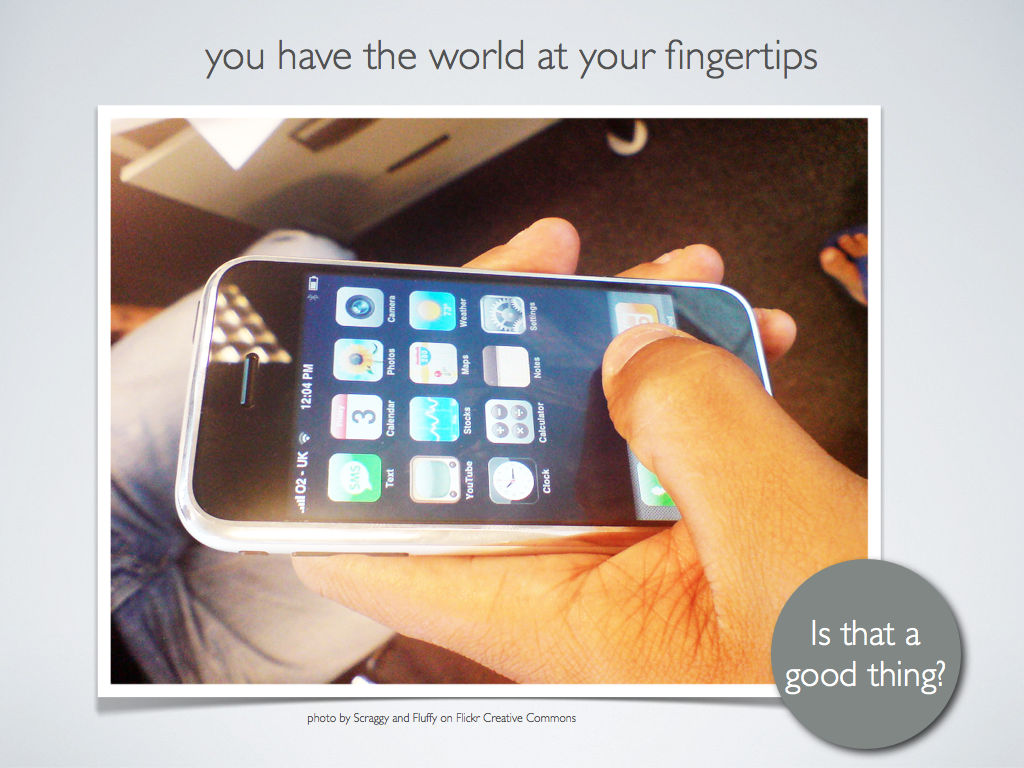
All of this 1:1 talk made me think of this great photo prompt from John Spencer.

http://visualwritingprompts.wordpress.com/2012/04/30/the-world-at-your-fingertips/

Driving But Not Steering #leadership #edchat

http://www.flickr.com/photos/anto164/2454925189/


I was thinking about leadership last night as I was getting ready for bed and the role I play in it. Here I am in a district that I'm leading towards effective appropriate use of technology in our classrooms. I've been asked to help start a 1:1 program and we will be hosting an eLearning Conference this summer. I have certain things I want to see in our classrooms and more importantly in the lives of our staff and students. However, I think the journey of learning is a personal one.

I found myself asking this question: Can I drive our district without steering it?

Because that's what I really want to be able to do. 

I want to be able to help us accelerate by pressing on the gas sometimes. I feel like it's part of my role to continue to push us and stretch us.   I want to be able to brake as needed because there are times when we really need to slow down and think about what's ahead or just enjoy the view around us

However, I'm not sure how much I want to steer. I'm not here to take people where I think they should be but I'm here to make sure they get where they want to be. 

Eventually, I'd like to just be a passenger. Just along for the ride. 

Does this make sense to anyone beside me? How much driving/steering should leaders do? I'd love to hear your thoughts.


You Might Also Like:


A Month of Learning

One week into my new job and I am really enjoying myself. I know things won't always be perfect and I'm certainly still in the honeymoon phase. For the time being let me live in my fantasy world. In coming into a new town and a new position I decide the best thing I can do is make my first month here a month of learning. My focus so far has been on three things.

What do schools have?

What do they need/want? 

How can I help?

These three questions have given me some insight into the school that I've visited so far. It's been fun checking schools out, talking to principals, teachers, and students about learning. Each conversation I have had we've focused on learning over devices, teaching over technology, students over standards, and future over past. One principal looked at me and said, "Well you certainly have an ambitious agenda." I don't know any other kind of agenda to have.

It's an exciting time in our district and I'm glad to be a part of it. Follow along if you'd like on Twitter. I'm using #ClarkTechTour as I visit the schools in my district. What will I learn today?

How to Connect the Dots


This post was originally written for SmartBlogs on Education. I did make one update under web resources. I foolishly left off TeacherCast when I originally wrote the blog. 
One of the biggest things I have learned in the past two years is that I don’t need to know the answer; I need only to know how to get the answer or point somebody to the answer. It’s a skill that I have developed since becoming a connected educator. Becoming a connected educator has helped me grow more than I could have imagined, and it’s allowed me to help educators in my district and far beyond.
When I am faced with question, whether my own or somebody else’s, I go through several resources that help me connect the dots.
This is no certain order.
1. Myself: This resource is the easiest to go through because there’s not a lot there, although it is growing and will continue to grow because I am a lifelong learner.
2. Personal learning network: Let me break my PLN down into two groups.
  • Local: I am blessed to work in a connected district. I serve on a team of innovation, curriculum and technology specialists. It’s a great team with a nice mix of former K-12 teachers from every subject background. I created a list of our team on Twitter and highly recommend following the members. Within my district, we also have theLearning Leadership Cadre, the Community of Digital Educators(#EVSCCODE) and The Network (#EVSCNetwork). Between the team, those three groups and teachers with whom I work in my building, I have a pretty good place to start. The great thing is I have shared them with you!
  • Global: Though I have an amazing local PLN, I also have a fantastic global PLN. My global PLN gives me a fresh perspective on education and pushes my thinking. By being an active connected educator, I have had an opportunity to learn from educators worldwide. I am continually amazed at how fast my PLN responds to requests I put on Twitter. If you don’t have a PLN or you want to help somebody build his or hers, check out the Tools for Building Your PLN LiveBinder that Tim Wilhelmus and I made and Wilhelmus’ Twitter for Educators.
3. Web resources: I have my go-to people in my PLN and certain hashtags I follow and use frequently. Then there are the main websites that I look to for help.
  • Cybrary Man: I have never found a topic for which Cybrary Man doesn’t have a page. It is truly remarkable the amount of information and help you can get from his website.
  • Free Tech for Teachers: Richard Byrne’s ability to share resources at such a high frequency is astounding. The search bar for his website will help you find the right tool in a hurry.
  • eduTecher and eduClipper: These sites, from the great Adam Bellow, are fantastic! The organization of eduTecher and the personalization of eduClipper are great tools to have in your tool belt.
  • TeacherCast: Jeff Bradbury who runs TeacherCast has an amazing list of resources for professional development. His blogs, podcasts, and mobile app have saved me on more than one occasion. 
This is only a small portion of what I use to connect the dots. The truth is I will use anything and everything I can to connect dots.
What do you use to connect the dots that I haven’t listed?

Parents Have Power

I'm not going to lie, I have had those moments when I dreamed about having a movie made about my contribution in education. If John Goodman was still young or if Seth Rogen and Jonah Hill were still chubby, then they would certainly be in the running for the lead part. I'm not sure how I could get JJ Abrams to direct it but I sure would try. However, I am certain that no movie about about my life will be made.

Not only have I come to grip with the fact that there will probably never be a movie made about my life but I am starting to think that my greatest contribution to education will not come from my role as an educator. You see, I am starting to think that the biggest contribution I can make to education is the one I make while wearing my "parent hat". It's the hat I prefer to wear anyway. You see, I won't always be a professional educator but I will always be a parent.

I don't know about everyone else but I am often approached by friends of mine on how they should handle an issue their child is having at school. More often than not at some point in the conversation I will say to them, "Parents have power." A group of parents can get things done in a school faster than any teacher or politician.

When it comes to the issues that matter in education like poverty, standardized testing, teacher/school evaluation, funding, equity, and the digital divide, just to name a few, it is going to take a collective push from students, parents, and educators. Of all the great contributions Will Richardson has made to education I think one of his greatest accomplishments was the day he and his wife opted his son out of his state test.

I have hope that we can improve education. I just think it's going to take more than just educators to fix it. We have got to get students and parents involved in this. Those of us who still have children in schools have the unique opportunity to attack our issues from two different fronts. We can't be afraid to put on our parent hat and demand a better education for our own children. I hope my sons, as they get older, will work towards improving education as students.

This is not to say that teachers who don't have kids or who have kids that are out of school are not making a difference. Obviously it is going to take all of us if we are going to see the change I think we all want to see.

Parents have power. I think it's a power we don't tap into enough in education. As teachers I think we sometimes fear parents. As parents who also happen to teach I think we fear we are "biting the hands that feed us". We have to got to get parents involved in this fight for education on a larger scale. As a parent/educator I have got to push myself beyond twitter and blog post. If all I ever do is tweet and blog about what I dream education can be but never fight for it, what good am I doing?

This is why I moved my kids to a different school last year. The school they were at was a good school but it wasn't the right fit for my kids. I had to get over my fear of the possibility of the people I work with being insulted and do what was right for my kids. This is why my wife and I are talking about opting my oldest out of the state test. I think they're harmful to education and they don't tell me anything about Micah that his teachers don't tell me on a weekly basis. All it's been used for is to inaccurately grade my kids' school and to help foster a competitive, non-collaborative, school culture. There is work to be done and we must work together. I'm sorry, but I don't think who gets elected next month is going to change much in the world of education.

Educators, what can we do to help get more parents and students informed and involved in this fight? Parent/educators, do you face some of the fears I have talked about? How do you leverage your dual role to improve education in your city?

Similar Post
My Kids' Life Without Homework
Wisdom of a 9 Year Old
Starting the Year Off Right


Leadership: Vision, Passion, and Emotion


I've been thinking a lot about leadership lately. I've been thinking about it from the standpoint of a follower and a leader. In some ways we are always following and we are always leading. Even if we don't realize it. So I think it is real important that we think about the type of leaders we want to follow and the type of leader we want to be.

One could look at leadership as a combination of a person's vision, passion, and emotion. I think it's real to watch leaders balance these three components and the effects it has on those who are following them or are suppose to be following them. 

I have seen leaders who you knew what they wanted but were hard to read emotionally. Does that make sense? I knew exactly what they wanted and what they expected out of me but when I talked to them I couldn't really tell how they felt. Their decisions were based on their vision and passions but they kept their emotions in check.

Then I've seen leaders who you knew exactly how they felt but you didn't know what they wanted from you. I could tell if they were pleased or angry but I never knew what they wanted. Therefore I was always more nervous talking to them because I felt like I was flipping a coin and I was either going to get happy or mad. When this type of leader makes a choice it is hard to tell if they made it based on their vision, passion, or emotion because they haven't articulated where the are headed.

I must admit, I'm not sure if any of this makes sense. Let me just boil it down to some bullet points.

  • I can't over emphasize how much I want a leader who has a clear vision and can articulate it well.
  • I want a leader who has passion but keeps his/her emotions in check because I think emotions can effect decisions and it's not always positive.
  • Not only do I want these things as a follower but I want to have them as a leader.

So now you can tell me if this blog post makes sense or not? How important are vision, passion, and emotion to you as a follower/leader? Can you really be called a leader if you have no vision? Can you be passionate but not emotional? Should you be?

Similar Post:


Three Keys to Leadership

I'm not sure it can be overstated how important leadership is. Leadership is what tips the scales in the workplace.  A good leader can take a bad situation and turn it around and a poor leader can be handed the best situation and turn it into a disaster.

Bill Bradley once said that leadership is unlocking people's potential to become better. I couldn't agree more with his statement. The question is how do leaders do this? What are the characteristics of a good leader? Now obviously there have been books and books written about what makes a good leadership and I'm not naive to think I'll cover everything in one blog post. However, I believe I have identified three keys to being a good leader.

Like a lot of my blog posts, it all started with something I tweeted the other day.

Now I would like to expound on that thought a little bit more by discussing why I think those traits are important, why leaders struggle with them, and how we can develop them.

Willingness to Empower

Why it's important:

The best way to lose power is to try to hold onto it. The word empower means to give authority to somebody else. Good leader will work to find ways to hand their authority to those around them. They will do this for a couple of reasons. One is because the recognize we can't do this alone. I don't care how big or small the job is, we are all better when we work together. Another reason is because when people are empowered, they feel energized. Think about the word "em-power". If we don't empower people, then they will feel powerless. If the people who work with us feel powerless, they won't work with us, yet alone for us, for very long.

Why it's difficult for leaders to do:

The reason why it's difficult for leaders to empower their employees is because when we empower people we feel like we are losing control and become less needed.  Control is an illusion. A leader will only have as much control as they are willing to relinquish. Also, a leader must ask themselves this question, do you want compliance or commitment? Micromanaging might increase the amount of compliance you get from those under you. By empowering those around you, you will increase the amount of commitment you from those who work with you. Also, it is a lie that the more responsibility you hand off, the less you will be needed. In fact, the opposite is true. Empowering those around you allows you to grow in influence and you become more important.

How leaders develop this trait:

In order to develop this trait, you must first have a clear direction where you want to go. A leader can not empower people if they don't know what they are empowering them to do. Once a clear vision has been determined, then it is easier to delegate responsibilities to those around you. Also, a leader must understand the strengths and weaknesses of those on his or her team. When you have a vision and understand your team's strengths and weaknesses, then a leader can feel comfortable empowering the people he or she works with.

Willingness to Trust

Why it's important:

Change will not occur without taking risk. If people are going to take risk, then trust has to be involved. They have to first trust themselves and their decision making.  However, if they don't feel those leading them have trust, then will be hesitant to take risk. Even if they have complete trust in themselves. Also, it's important on the leader side of things as well because if you don't trust those you work with then you will spend all of your time worrying about what they are doing or micromanaging every decision.

Why it's difficult for leaders to do:

There are potentially several reasons why a leaders struggles with trust. One could be that the team they have was one that was handed to them and not one they put together themselves. Another could be because their boss doesn't put trust in them and they have learned not to trust those around them. Also, leaders feel, in the end, it's their name at the top and are not willing to put their reputation in the hands of another person.

How leaders develop this trait:

First of all, a leader must be willing to be a risk-taker themselves. Putting your trust in somebody is a risk but it is one that reap great rewards.  Leaders must be willing to accept this risk. Even if the team is one that was handed to the leader, by placing trust in them a leader will unify their team. Willingness to trust is one of those traits that you can only build by diving in and taking the risk.

Willingness to Release Control

Why it's important:

A leader can't do it all effectively. There is almost no task out there that won't be accomplished quicker and better without a team. One of the main role's of the leader is to be working on the next steps for their team. A leader can not be working on the future if they are too busy controlling the present.

Why it's difficult for leader to do:

Like building trust, it can difficult to release control if a leader feels like it's his or her butt on the line. Also, when leaders release control then they must also be willing to put others ideas ahead of their own. This is where pride can rear it's ugly head. Self-confidence is a great trait to have but pride is a destructive trait. A leader can't release control and be prideful at the same time. Leaders, at one time or another, will have to deal with pride.

How leaders develop this trait:

First of all, leaders must reflect on how they like to be lead. Most likely they moved into leadership because somebody released their control on them and allowed them to shine. Fish will only grow to the size of the tank we put them in. The bigger the tank, the bigger the fish. The bigger the body of water, the less control we have. If leaders want their team to grow, then they will have to eventually release control. Releasing control is a decision and it's one that is vital to the growth of leaders and their teams.

It's time to hit the comment section up! What traits do you look for in a leader? How do you develop the ability to empower, trust, and release control? 

Education Dreamer