Showing posts with label 12 Days of Dreaming. Show all posts

Dreaming About Joy in Learning #12DOD #StuVoice #Choose2Matter


Editor's Note: I am so excited to bring you our first post in our Student Edition of The 12 Days of Dreaming. As I talked about in my last post, this has not come together as I had hoped. I am completely okay with this for a couple of reasons. One, I love learning and I can find a great deal of learning when I struggle. Two, I still have some amazing post to share with you! I plan on spreading these out over time.
I hope you enjoy!


Our Dream for Education is Joy in learning.
What does joyful learning looks like to us? Having fun while learning. We think that crafts would be a great way for kids to have joy while learning because we get to really connect with learning through creative expression.  Making paintings would be a good way for kids to show what they’re learning through art.  Another good way to have fun while learning is sewing, not for just girls, but boys too.  We believe that art would be a good way for kids to connect to learning.
Another way to have joy in learning could be to have more fieldtrips.  Fieldtrips would be a good way for kids to interact with what they’re learning about. It would be better for kids to go to an art museum than for a teacher to make them write an essay about Picasso.  One good field trip destination could be a camp like Camp Tecumseh.  Camp Tecumseh is a summer camp, Girl Scout camp, and a history camp.  They teach you about the past while letting you interact and pretend that you are a pioneer. They let you bake Johnny Cakes, build log cabins, go fishing, visit a fur trappers cabin, and even spend the night in a cabin. We think you should experience what you’re learning firsthand.
We believe that games are a good way for students to learn because it triggers our minds to learn and we have better focus.  One way to do that would be to have a math game day.  It would help students by making the want to learn more about math so they could excel in the math games.  At our school, we have math at the end of the day, and we are tired.  Since we are tired, we have a short attention span, which does not enable us to learn as well.  Therefore, we should have a math game day, so we will want to pay attention even if we are tired.
Literature games are also a good idea.  They will help kids who have trouble understanding literature.  They will also have fun.  They will make kids want to learn more about literature.  It will also make kids want to read and write more.  A fun game option that will also trigger the mind is to design a game based on a book that you like.  It is a fun stretch of the brain and other people can play it.  Kids will be excited to work on this fun project.  It will help develop creativity.  And, best of all, kids will find joy in doing it.
One last fun suggestion is to have an educational/strategy game day.  It will stretch kid’s minds into thinking hard.  It will also give them the joy of picking their own game.  They can have freedom in their choices.  They will be able to have fun while they learn which our main goal in education is.
We think students should have free education time to do what they want, as long as it is educational.  One option is reading for fun.  We believe that reading for fun is an awesome way to expand vocabulary.  Another fun choice is free-write.  We like to write letters, books, or stories.  It helps the imagination grow and develop.  One last fantastic idea is to free-draw.  You could also draw up posters to raise awareness of events or important tests.
Our dream for education is to have joy in learning and interactive experiences.  We hope that you enjoyed our post.  Where do you find joy in learning?
This post was written by Sophie and Claire. Two students from Sara Hunter's class. Thank you Sophie and Claire for sharing your dreams with us! 
Pushing Forward #12DOD

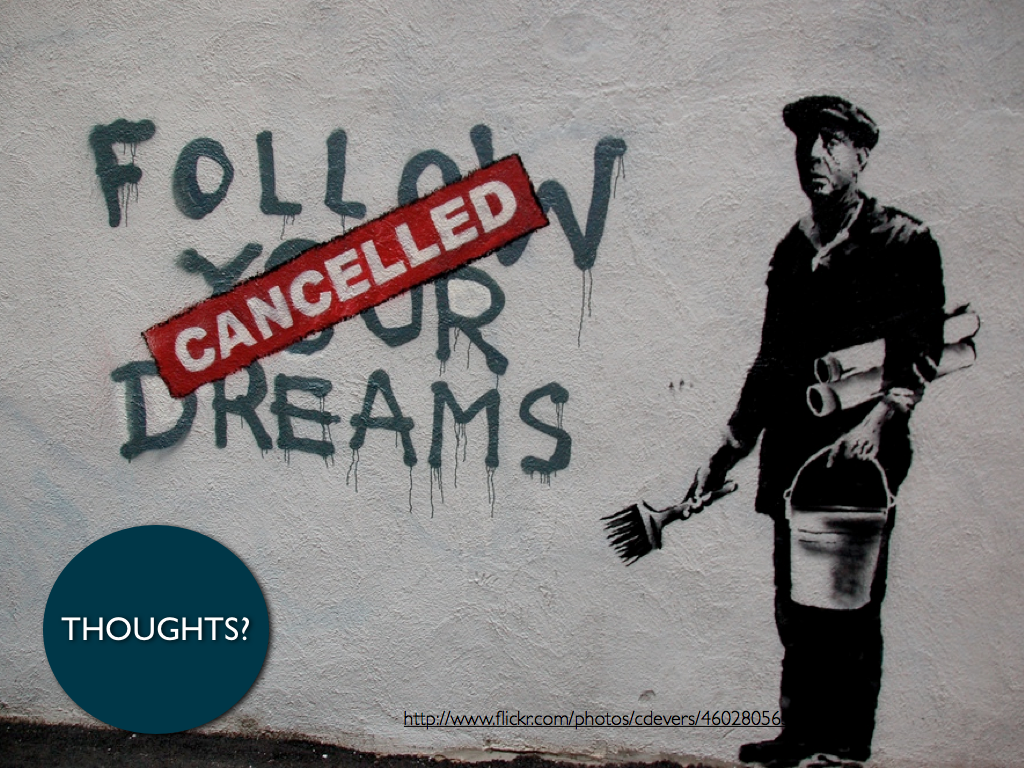
This past December I ran a very fun series called The 12 Days of Dreaming. It featured some great guest bloggers talking about their dreams for education. It was so much fun that I thought it'd be great to do it again but I wanted it to be more. I wanted our students to have a voice. 

So I talked to some of Zak Malamed of #StuVoice and Angela Maiers of #Choose2Matter and launched the idea of doing The 12 Days of Dreaming: Student Edition. Initially, it was a big hit and people were excited. 

The idea was the same as before but with students. Get 12 students to write post about their dreams for education. I even through out some other ideas on how we can tap into student dreams on two different post you can read here and here. However, for whatever reason, the idea never really took off. 

I didn't have people submitting ideas. I had people who told me they loved the idea but then no submissions came. I'll be honest, it was discouraging at first but it has also pushed me to reflect on this process. Here are some of my thoughts on why this has struggled.

1) I just didn't push it hard enough and in the right way. For whatever reason, it just didn't connect enough with people and they didn't push it out to their students.
2) My job change and relocation didn't help. I moved two hours east and I didn't have that group of people I could reach out to have them share this with their students yet. We have some amazing teachers and students in my new district. I just didn't have the relationships in place that I needed to help make the successful.
3) Not being in the classroom anymore. I love what I do now but I do miss my classroom full of students. I would have loved to have done this while still in the classroom.
4) People are busy and the school year can quickly get away from you. Especially the second semester.
5) Maybe it just wasn't a good idea. I'm not saying I agree with that but not every idea I come up with is a good one. 

Part of me wanted to just burry this idea, remove these post, take down the banner, and pretend this never happend. However, that would do all of us a disservice. 

Especially since, even though this hasn't come together liked I hoped, I do have some post to share with you. It won't be 12 days worth but we will get some post to you from students on how they'd like to see education. 

I am excited to share these ideas with you. I hope you will find them engaging, comment on them, and share them with others. Our students have a voice and it deserves to be heard. 

Look for the post to begin next Tuesday! 

10 Ways to Tap into Student Dreams #12DOD #StuVoice #Choose2Matter

I can not even begin to imagine the number of dreams I have had over my lifetime. There are those times that I awaken from sleep and the dream feels so real and I can recall every detail. Then there are the dreams that just fade away with the darkness as the sun rises. There are times when I dream all night but remember none of them.

That's the thing about dreams, if we don't capture them, then we run the risk of the losing them. That's exactly why I started The 12 Days of Dreaming. I wanted to tap into the dreams of my colleagues. Now, #StuVoice, Choose2Matter, and Education Dreamer are pushing forward #12DOD: Student Edition. Since it was launched on January 21, 2026 I have had numerous questions about what we're looking for and what age does a person have to be to submit an idea.

I wanted to write this post to set the record straight, this project is for any student, any age, any nationality. If a student wants to write it by him or herself or collaborate with others.

Actually, it doesn't even have to be a traditional blog post. During the first #12DOD @okmbio wrote an amazing poem that was one of my personal favorites.

Here are some ways we can tap into students' dreams.

  1. Traditional Blog Post - Preferably 400 - 600 words 
  2. Poem - There are few things more captivating than a well written poem. 
  3. Song - Lets just try to keep it shorter than a Dave Matthews Band live performance. :)
  4. Speech - I have this image in my head of a student giving his/her stump-speech for better schools.
  5. Press Conference - Make it look like a Presidential press conference about your dream school. 
  6. Drama - Get a group and act out your dream school.
  7. News Report - If you already go to your dream school, then tell us about it and why it's your dream school!
  8. In Plain English Video - Those fun videos like this one about Twitter. 
  9. Art - Want to paint a picture of your dream school? Why not? Submit it!
  10. Wild Card - There are 1000s of creative ways you can share your dream! Just don't keep your dream to yourself!
We all have dreams and hopes for the future of this world. They deserved to be heard and they deserved to be pursued! 

There's no wrong way to share your dreams! 


All ideas can be submitted by filling out this form:


Photoprompts: 12DOD Student Edition

It pays to be friends with the amazing @johntspencer. Not only is a great person and enjoyable to talk to but he's also a great resource. #StuVoice, #Choose2Matter, and Education Dreamer recently launched The 12 Days of Dreaming Student Edition. I reached out to John and asked if he had some photoprompts that would work for this project and he sent me these from @lukeneff and himself.

These are just ideas that students and teachers could use to get their creative juices going as they think about how they would reimagine schools.


Again, these are just possible starting points for students as they explore submitting an idea for the project. Thank you John and Luke for letting us use these for this blog post!

Dream on!

12 Days of Dreaming: Student Edition

This past December I ran a series on Education Dreamer called The 12 Days of Dreaming. Over a course of three weeks I posted twelve different blogs by fourteen guest bloggers. Each blogger was an educator and he or she wrote about her dreams for education. Some covered broad topics such as assessment and the physical structure of the school. While others focused on their personal classroom or subject area. It was a great experience with great results.

Now it’s time to take the project to the next level. That’s why I’m excited to announce that Education Dreamer is teaming up with the people at Student Voice and Choose 2 Matter to bring to you The 12 Days of Dreaming: Student Edition!  This will be a collaborative effort to highlight the dreams of the students who enter our schools. 


We are looking for a minimum of 12 guest student bloggers. The series will run in February. At the end of the series the post, along with some special guest post, will be released in the iTunes bookstore. The books will be sold with all proceeds going to the Sandy Hook Scholorship Fun!  

If you are a student, or know of one, who would like to submit a blog post for this project, please submit your idea for a 400-600 word blog post by filling out this FORM by February 8. All you have to do is answer this question:

What are your dreams for education?

Thank you for taking the time to be a part of this project! We look forward to sharing your dreams with the world!


#YouMatter #DreamOn
If you'd like a badge for your website: Here it is courtesy of @ktvee, who is amazing!

<a href="http://www.educationdreamer.com/p/this-past-december-i-ran-series-on.html"><img src="http://farm9.staticflickr.com/8363/8384312753_30cf83bdef_m.jpg" border="0" /></a>

12 Days of Dreaming Week 3 Recap #12DOD

Well, all good things come to an end. This has been an amazing three weeks for me. I have enjoyed everyone's post. It is such an inspiration to see so many great educators from all over North America share their dreams with us! Thank you Kelley, Tim, William, Carolyn, Josh, Shira, Allison, Jeff, Jennifer, John, Cheryl, Andrew, Brian, and Shelley! All of your post touched my heart and inspired me! You can find this week's post and all of the post from the series here.

This week's post were a great way to finish our 12 Days of Dreaming. John started off by laying out some ideas about how we can better design the physical structure of our buildings. I've often thought I wish I could start off each year with an empty classroom, a budget, and my students. The first thing we would do design our classroom. Talk about a great way to kick off the year and think about the math they would learn.

Then Cheryl and Andrew shared their story about how they collaborate in such a unique way and team teach on opposite sides of the country. What I love about their post is it really shows how far teachers are willing to go to help provide great education for their students. I know they will continue to evolve and do even greater things. I'm excited about what the future holds for these two!

The 12 Days of Dreaming wouldn't be complete without a post from Brian Bennett. Brian pursues his dreams with all of his strength. His post comes from the voice of man who has pushed himself to be the best he can be. There isn't a more reflective educator out there than Brian. You can feel it as you read his words. Brian has felt the pain, struggles, failures, joys, and victories of a dreamer. His post reminds us that there is a price that comes when we pursue our dreams but it is a price worth paying.

I thought Shelley's post was the perfect way to end our series. This paragraph from her post really hits home with me.
I say learner-centred, rather than student-centred, because there’s much more to life than being a student.  There’s more to life than being academic. I’ve come to realize that being good at school really only means you’re good at school. I dream that education systems will begin to realize this.  Too many of our kids complete their education without having any idea what they love or what they’re really good at. Instead, too many need to recover from their experience.
As a parent and an educator I want my kids/students to love learning the way I do. I want every day to be about helping them find themselves. I want them to dream the way we have dreamed these last few weeks. I love how Shelley talks about how she would go about seeing her dreams come to pass. It's a fitting way to end the series by showing us that dreaming alone won't change anything. We must act on our dreams!

Then after the last post we had a #12DOD chat on Twitter. It was a great conversation. You can read the archives here!

Thank you so much for being a part of this series! I hope you have enjoyed this as much as I have! I hope to do this again in the future!

Dream on my friends!

Brett

Day 12: Dreaming about Learner-Centered Schools by @wrightsroom #12DOD


Editor's note: Wow! I can't believe that it's the final post already! I will have one more recap tomorrow with some final thoughts and some thank you's! I hope all of you can join us tonight (12/20) at 7:30 PM EST for the 1 time #12DOD chat! We will be discussing our hopes and dreams for education and how to make them a reality. 

I dream of one day being the administrator of a school that is entirely blended and learner-centred. But more than this, I dream kids will experience this from Kindergarten, through to grade 12. I know this is a reality in a few places, but it’s far from the norm.  The average child’s school experiences are drill and kill and stand and deliver, but I digress.

I dream of classrooms that are alive with student conversations, questions, and inquiries, regardless of their age. I dream of learners who are able to craft questions they are curious about and who have the tech ability and network connections to chase them, or teachers who have the know-how and learning network to facilitate the process.   Furthermore, I dream of kids who are able to take the outcomes of their curriculum, and decide what they’re going to learn, how they’re going to learn it and how they will show their learning.  As part of this, I dream of kids who are able to thoughtfully articulate their thinking, who can evaluate their mistakes and design projects with purpose and impact. I dream of classrooms where teachers and learners share ownership of the learning environment. 

I say learner-centred, rather than student-centred, because there’s much more to life than being a student.  There’s more to life than being academic. I’ve come to realize that being good at school really only means you’re good at school. I dream that education systems will begin to realize this.  Too many of our kids complete their education without having any idea what they love or what they’re really good at. Instead, too many need to recover from their experience.

How would I begin this dream? With my students, we start with unlearning, so with teachers, I plan to start the same way.  My students often don’t question their education because they don’t know what they don’t know. I think teachers are often the same way.  For many years, I was the stand and deliver teacher because I didn’t know any other way.  Changing what you know can be frightening and threatening. Consequently, I have a dream that teachers will take risks, regardless of their fears, not always knowing the direction or the outcome because their students need them to. 

What would it look like for teachers to go through a process of unlearning? Too often what we do in our classroom is simply perpetuating the way we were taught. What would it look like to begin to imagine different possibilities? I dream of teachers who are willing to peer into the classrooms of others who have begun the voyage, and who are willing to imagine how it might change their own teaching. I dream of a staff who is willing to critically evaluate what they don’t like about school, and use this to begin to purposefully design classrooms that empower learners. 

What I propose isn’t simple. The road is long, difficult and messy.  And yet, I believe, it’s worth every moment. 

Shelley Wright is a teacher and education blogger living in Moose Jaw, Saskatchewan in Canada. She teaches high school English, science and technology and works with other teachers interested in connected, inquiry-driven learning. Her passion is social justice and helping her students make the world a better place. She blogs at Wright’s Room. Follow her on Twitter at @wrightsroom.

Day 11: Dreaming about Growing Pains by @bennettscience #12DOD

Editor's note: Tomorrow is the last day for the 12 Days of Dreaming! I am so honored that so many people have participated! We will cap off the series with a Twitter chat about the different post and our dreams for education using #12DOD at 7:30 pm EST on December 20.

If you have kids, know people with kids, or work with kids, you know that they will face some painful days as they grow. First comes teething, which I’ve heard is a nightmare. Then, the awkward pubic years when bones are stretching faster than the brain’s balance centers can keep up. Years pass, our joints begin to ache when the weather changes, and we can’t heal up from injuries as fast or as completely as we used to. 

The business of growing is difficult.

But, through all the pain, we learn a valuable lesson: pain and growth have to come together to be meaningful. 

I don’t know many cyclists that learned to ride a bike the first time their parent let go of the seat. A scraped knee from falling off of a bike helps us learn that balancing is much easier when we’re moving forward.  As we move through the pain of growth, we come to expect better things when it’s over.

Schools are a prime example of pain and growth. Students, you have stories about working through very difficult classes. Teachers, what about the student that tested you every day of class? Administrators, you can tell us about the first year teachers that have come through your building.

Pain is an indicator of growth.

Education is in a painful place right now. Schools and governments are polarized against one another over education. We are being blamed for many social problems, and there isn’t much trust in the state or federal leadership. Teachers are fearful for their jobs and the role testing will (or won’t) play in how we are evaluated. 

Within the frustrations and the stress, though, we have an opportunity to implement better schools.

It is our responsibility to model growth to our students. Brainstorm with your colleagues on how to implement changes. Work with student advisory groups to solve problems. Encourage someone more frequently than you complain about a particular circumstance.

The attitude shift begins with recognizing that if there is no pain, there is no growth..

Don’t be soured by painful situations. Recognize the opportunity for growth and focus on the goal rather than the immediate. There is no silver bullet for any single problem. But, we can turn a lot of silver BB’s into a comprehensive solution. 

Let us know in the comments what growing pains you’re having and what you’ve learned as you’ve worked through them.

Brian E. Bennett (@bennettscience) is a science teacher living in South Bend, Ind. He has spoken nationally and internationally on flipped learning, most recently speaking at ISTE 2012 in San Diego and as the opening keynote speaker at the 2012 Flipped Learning Conference in Chicago. Bennett writes frequently about flipped learning on his blog,Educator, Learner.

Day 10: Dreaming about Connections by @guster4lovers & @Thomasson_engl #12DOD

Editor's note: We will have a #12DOD chat this Thursday, December 20, at 7:30 PM EST. We will be talking about our dreams and how to make them a reality. In the meantime, enjoy this great post about the power of collaboration!

This August, as each of us finished our first day of school, we collapsed into chairs and stared at our computer screens, much like we had on every first day of every previous school year.

But there was one major difference on this first day of school:

On that screen was a person, a partner, a friend, a collaborator, one who understood us and understood exactly what had happened in our classroom because they were the one who helped to plan and prepare it.

Three months after meeting on Twitter, we decided to team-teach.  This meant starting over with curriculum maps, syllabi and methodology.  This meant finding a way to work together from 2,500 miles apart without ever meeting face to face.

As a result of that decision, we discovered that we now had access to a collaborative partnership where lessons were planned, frontiers were traversed, troubles were shot, and problems dealt with jointly.  And slowly, the difficulties and challenges from previous years began to disappear.

But we needed to know why, needed to be able to explain the machinery at work behind the scenes.  We knew that collaboration was important, but our transformation entailed much more than that.  Both of us had collaborated in the past, and we even had an extensive PLN on Twitter, but no collaboration had ever fixed the root issues: teaching isolated us; creating an effective learning environment was difficult; meeting the needs of each individual student was near-impossible; we weren’t doing well enough, and often, we weren’t even doing enough, period.

Those problems still exist and will probably always exist.  Unlike past collaborations, however, this one gave us direction and insight.  Now we had someone to accompany us on the journey, where we could face problems together, plan lessons together, and even work with students together.

In trying to figure out how this worked, we stumbled upon a way of thinking about teaching, learning, and collaboration that mimicked the process we had gone through and provides a way of replicating that process.  We call it The Equation:

Develop Relationships → Ignite Passion → Build Skills → Take Ownership

On the first day of school, we were not aware that the equation even existed.  We just lived it and figured it out along the way.  As we discovered The Equation, it gave us the ability to see it as a transformational process, but one that can happen in any classroom or collaborative partnership.

With The Equation, our process, the one that made us less isolated, and allowed us to be better teachers, can happen anywhere.

If only we had known that from the beginning.

**

Despite having the most solid curriculum and plan we had ever had for the start of school, at six weeks into the year, we kept running into the wall.  Our heads hurt from ramming the brick wall so many times, without getting any closer to breaking through.  

We just didn’t understand why all the things that had transformed us - relationship, passion, skill and ownership - wasn’t working in our class the way we knew it could.  We searched for answers, but it felt like throwing a dodgeball against the same brick wall; for everything we would try, the ball just kept sailing back at us with no visible improvement, not even a loose brick.

Instead of breaking down the wall together, that wall started to break down our relationship, our passion, and our ownership over the situation.  We, of course, didn’t have the perspective to see that, so we just assumed it must be our own lack of skill that was the problem.  Many times, we wondered if this was even worth it; with the amount of time and energy we were spending, our classrooms should have been magical places of transformation.  And they weren’t.  This collaboration was difficult, perhaps the most difficult thing either of us had ever done in our career.

For every step forward, it felt like we were pushed back five steps.  Every victory was marred by some failure or imperfection.

Added to that, we were both already broken when we met.  But the collaboration we discovered and nourished over those first few months was helping to heal those deep wounds left from years of failure.  

And now, the first six weeks of school reopened those wounds and nothing we did could make them go away again.

So we ignored it.  And things just got worse.  We were still friends, and we still planned and de-briefed lessons together.  But the alchemy that our collaboration brought us over the first few months had disappeared and we didn’t know how to get it back.  We wondered if it was even possible, or if it really had been a dream...one that ended with us waking up, being back to where we had started.

**

Frustrated, broken, exhausted and overworked, we stumbled into Thanksgiving break.  In that state, Cheryl took a day trip with another Twitter friend and high school teacher, Karl Lindgren-Streicher.  They met up for lunch and then drove to some of the vineyards in the Napa Valley.  Along the way, they called Andrew and within minutes, a day off became the spark that reignited everything: the passion for our students, our flipped class, and our relationship.  

That is when we realized that we had been Doing It Wrong.  The equation never was meant to stop with us.  

It had to be flipped too.  

Our students needed to experience what we experienced over the summer.  And just like with teachers, the equation doesn’t work on people in isolation; no, our students needed to be transformed through their relationship with us, and with each other.  Only then could our classrooms become the kind of community that in and of itself had the power to transform.

It was then that we finally understood that we had neglected building relationships with our students.  Yes, we were working with them one-on-one, and talked to every student, every period, every day.  But they didn’t really know us, and we didn’t really know much about them, apart from their academic ability in reading and writing.  

We had done it backwards.  We were so frustrated by how little ownership the students had over the course that it blinded us to the truth: before they could be responsible for their learning, they needed to care about us, care about the subject, and build their skills.

Just like we had to do when we started working together.  

We have a term for when what we do matches the process we expect of our students: it’s the MetaFlip.  In the MetaFlip, we deconstruct the actual process we as collaborative partners had gone through, and then plan backwards to ensure that our students can repeat our process successfully.  And this time, being successful meant starting over at the beginning.

So we deliberately built activities that would allow our students to get to know us, and for us to get to know them.  We threw in the most high-interest and real-world-relevant content to engage their passion for literature, writing, and arguing.  Then we used that content and leveraged that relationship to build their skills in all those areas.

Although it’s taken an entire semester to get there, our students are finally back to where we wanted them to start: taking ownership of their learning.  During the most recent project, not a single student asked how or even if they would be graded.  Students are designing the final unit and preparing all the content, as well as making the assessment and reflecting on their learning.

So how did it take this long to figure it out?  Well, there’s a darker side to the equation.  The darker side is the anti-catalyst.  The forces that we can’t control, but that affect us every day, whether we are in the classroom or not.  

There is the Socio-Emotional anti-catalyst.  This one can be a death in the family.  An accident or injury.  A break-up.  A physical or mental health crisis.  A traumatic memory resurfacing.  A friendship in decline.  These are the things that our students carry with them daily, often unnoticed to anyone else, but that weigh them down under the force of sorrow, anger, or fear.  These are the things we carry as well, both for ourselves and for our students.

There is also the “I Know How To Play School” anti-catalyst, which actually often works in tandem with the “I Don’t Know How to Do School” anti-catalyst.  Much like socio-emotional issues, these affect teachers as much as students.  We have all been conditioned into the factory model of education, and flipped learning represents a major departure from that model.  We are now asking for critical thinkers, not machines to rival Google’s knowledge.  We now want creative, innovative thinkers, not someone who can twist a knob or pull a lever on the assembly line.  

But neither we nor our students know what it’s like to not live in that model.  So when grades aren’t all that matter, and when learning is the focus, the transition is going to be challenging.  There are lots of questions for which we don’t have definitive answers:

How do we grade?  
What are we assessing, and what SHOULD we be assessing?  
How do we develop intrinsic motivation?  
How can we measure creativity and innovation in an A-F world?  
How do we build academic behaviours but still keep the focus on the Real World?

These anti-catalysts are so dangerous because they are often ignored; when you are neck-deep in the ocean, you’re working hard not to drown.  

The truth is, we’re all drowning.

But that’s why we need each other.  

The equation starts with relationship for a reason.  The most powerful solution for any problem in the classroom, or in life for that matter, is relationship.  It is what saved us from throwing in the towel on this collaboration when it got difficult.  It is what motivates our students to keep going after they fail.  It is often what gets us and our students to school every morning, whether or not we feel like it.  

Relationship and community are what gets us through unspeakable tragedy, loss, and grief.  It is what gives us the strength to keep going, and hopefully, to heal.

Relationship has to be the glue of a classroom, and our flipped classroom, with cross-country team-teachers, needs a hell of a lot of glue.  Our country and our fellow educators also need a hell of a lot of glue right now.

**

Once our students believe in us and we invest in them, our community can then shift to finding and developing passion for learning.  We can get them excited about thinking, reading, writing and speaking about the Big Questions in life, and about the stories that make up our cultural heritage.  Through that passion, we build their skills so that they can not only understand but participate in that culture.

Finally, we transfer ownership for the learning from teacher to student.  At that point, we finally flip our class - after all, if a flipped classroom is student-centred, the real flip must be in giving students the responsibility to succeed or fail together, as a community of learners.

And through this process, we keep pushing back against all the anti-catalysts - the narrative that reminds us we aren’t good enough, that there is too much broken, that no one cares, that we are wasting our time, talent and treasure.  In pushing back, we are creating space for grace, hope, and possibility.

It is that sacred space - where there is affection, passion, skill and responsibility - that takes our dream and makes it a reality.  

The equation creates alchemy.  And what is alchemy, if not taking a dream and making it tangible?

Dreams can only guess at what is possible.  But what seems possible isn’t always what’s real.

Instead, our dream of what we wanted our classroom to be, and what we wanted for our students, is nowhere NEAR as powerful, as beautiful, as transformational as what we have now, together.

We couldn’t dream up a relationship where who we are matters more than what we do.  

We couldn’t dream up a passion that inspires each of us, unites us together, and drives our students.

We couldn’t dream up a person who would help us get better at teaching and would help our students get better at learning.

We couldn’t dream up a classroom where our students are partners in their learning, where we get to learn as much as our students, and all together, we make our classroom into a collaborative community.
And while we couldn’t dream of a world where our collaboration is possible, we couldn’t dream of a world where what happened in Connecticut this past week was possible either.  

Where this kind of transformational relationship and community is not just possible; it’s essential.  Where isolation is only a memory, and in community, we somehow find the strength to deal with tragedy.

Unlike that teacher we both were once, standing alone on the first day of school, we no longer need to face trouble and tragedy on our own.  By reaching out on Twitter to someone we still have never met in person, we found the only thing that has the power to change us, our students, and our lives.  

We found an end to isolation.  Someone else who would stand with us through our darkest hours, and remind us that we are not alone.  But fixing us and our relationship isn’t enough.

Our dream is that all students can find the same thing.  And for that to be possible, our dream has to start with our fellow educators.  

We want all teachers to feel the strength of community supporting them, encouraging them, challenging them, and helping them heal.  

Our dream is that none of us feel isolated.  And none of us has to be alone.

Our dream is that the equation starts transforming lives now.

Just like it has transformed ours.

Both Andrew Thomasson and Cheryl Morris teach English at the high school level. Andrew is a 10th grade teacher at Forestview High School near Charlotte, North Carolina, and blogs atwww.concertedchaos.com (on Twitter - @thomasson_engl). Cheryl teaches 11th and 12th grade at Redwood High School in Marin, California, and blogs at www.morrisflipsenglish.com (on Twitter - @guster4lovers). They operate a website for their students at www.tmiclass.com and can be reached through their joint email at tmi@tmiclass.com. More information on how they are team-teaching from across the country can be found at their blogs and www.tmiclass.com, and their instructional writing/reading videos are on YouTube.

Day 9: Dreaming of Better Space by @johntspencer #12DOD


Editor's note: My heart is heavy as we start the last week of the 12 Days of Dreaming. As we move forward with our dreams, there are 20 children who will never see their dreams fulfilled and countless people effected by this great tragedy. As we move forward this week, I hope we will all love a little more, reach a little further, and dream a little longer. This world will never be perfect but I refuse to think that we can't make it better. Take time today and hug a child, thank a teacher, encourage a parent, and remind somebody that they matter. 

Dream on my friends. 

“Ditch the Astrodome”

I remember watching baseball games in the 1980’s. I couldn’t tell if the Giants were playing in Pittsburgh, Cincinatti or Philadelphia. Every stadium was the same - a giant, donut-shaped behemoth meant for concerts, baseball games and football games. It was a one-size-fits-all mindset that ignored the nuances of the game.

Perhaps the worst of these stadiums was the Astrodome. Built in the sixties as a futuristic prototype of stadiums, it featured the world’s largest Jumbotron in the outfield and the trendiest yellow, orange and blue colors throughout. However, when the light blinded players, they painted the tiles and brought in Astroturf. The l turf injured players. The fans had horrible sightlines. The stadium grew into a modernistic relic.

So, it has me thinking about our donut-shaped behemoth schools systems. Some say we should crush them and build new places with iPads and Chromebooks and STEM centers. Think outside the box. Go futuristic.

I wonder, though, if we are simply setting ourselves up for a new Astrodome. See, I don't want to think outside the box. I don't want to demolish school altogether and start out with something new. I want to repurpose the box. I want to redesign schools so that they fit the purpose of learning.

My favorite ballparks are the ones designed with the baseball experience in mind. AT&T Park in San Francisco and Camden Yards in Baltimore come to mind. They are both high-tech without featuring tech as the driving force. There is an aesthetic and a purpose to the places that respects both the current context and the vintage past.

So, my dream for education is a little more like AT&T Park. Here’s what I mean:
  1. Respect the vintage while also thinking about the future: We need to recover nuance, paradox and a reconnection to the land. Some of the best ideas are vintage. Reformers need to be mindful that relevance is not the same as novelty.
  2. Open up the spaces: I’m struck by how open the best ball parks tend to be. Fenway and Wrigley fit this concept well. Why not open up the schools a little more? Create gardens. Allow for windows that open. Don’t tear down all walls, but maybe create some half-walls.
  3. Reconnect with the community: The newer ballparks open up to the community. They don’t feel as gated and guarded. You can see the beach or the skyline of the local community. What if schools were more open? What if they fit the identity of the community? What if we had more mentors, guest speakers and community experts?
  4. Be intentional: My favorite stadiums are built, not as stadiums, but as ball parks. They are designed for the game. We need to rethink the purpose of education and design schools that fit the purpose of learning. I would love to see more integration between subjects, more projects, more problem-solving and more critical thinking. I’d like to see fewer tests, packets and homework.
  5. Embrace creativity: The best ballparks have creative dimensions. Whether it’s the Green Monster or the ivy-covered fences or the home run porch, there is something creative to the place that fits the identity. I would love to see schools thinking creatively about space, curriculum and instruction. 
John Spencer is a sixth grade ELL teacher in Phoenix, Arizona. Over his nine years of teaching, his students have been involved in documentaries, murals and community service. He has also worked in doing professional development and coaching in technology integration. He blogs at edrethink and writes a column for Kappan Magazine.